
The Correct Order to Clean a House (And Why Most People Get It Wrong)
Most people clean their kitchen first because it feels like the biggest job. Then they dust. Then they mop. Then they notice dust settling back onto the floor they just mopped. The whole thing starts over.
Sound familiar? There’s a reason professional house cleaners follow a specific order. Once you know it, cleaning your home gets faster and actually stays clean longer.
According to the American Cleaning Institute, 34% of Americans are concerned they don’t clean enough — and 31% wonder if they’re even cleaning correctly. The problem usually isn’t effort. It’s order.
This guide breaks down the correct order to clean a house the way a house cleaning service near me would — room by room, step by step. You’ll learn the exact sequence pros use, why each step happens when it does, and what most people get wrong along the way.
If the list feels long by the end — we’ll show you an easier option too.
What is the Correct Order to Clean a House?
The correct order to clean a house is: start with the bathrooms, then dust and tidy all rooms top to bottom, then vacuum and mop all floors, and finish with the kitchen last. Always work from the highest surfaces to the lowest so dust and debris fall onto floors you haven’t cleaned yet. Clean wet areas like bathrooms before dry areas to avoid spreading moisture. This top-to-bottom, wet-to-dry, bathroom-to-kitchen sequence is the same system professional house cleaners use on every job.
Why the Order You Clean In Actually Matters
Most cleaning frustration comes down to one problem — re-contamination. You mop the floor, then dust the shelves. Now there’s dust on the floor you just cleaned. You wipe the counter, then deal with the stovetop. Now grease is back on the counter. Cleaning out of order means doing the same job twice.
Professional cleaners follow two rules on every job. Clean top to bottom so debris always falls onto surfaces you haven’t touched yet. Clean wet areas before dry areas so moisture doesn’t spread to rooms that are already done.
The most common mistake homeowners make is cleaning the kitchen first. It feels like the right call — it’s the busiest room. But the kitchen collects grease and food particles that can travel to other surfaces. It belongs at the end, not the beginning.
| Common Order (Wrong) | Professional Order (Right) |
| Kitchen first | Bathrooms first |
| Vacuum, then dust | Dust, then vacuum |
| Floors before surfaces | Surfaces before floors |
| Dry rooms before wet rooms | Wet rooms before dry rooms |
In our experience doing residential cleans, fixing the order alone cuts cleaning time by a noticeable amount. The logic behind it is simple — you stop re-doing work you already finished.
Step 1 — Start With the Bathrooms First
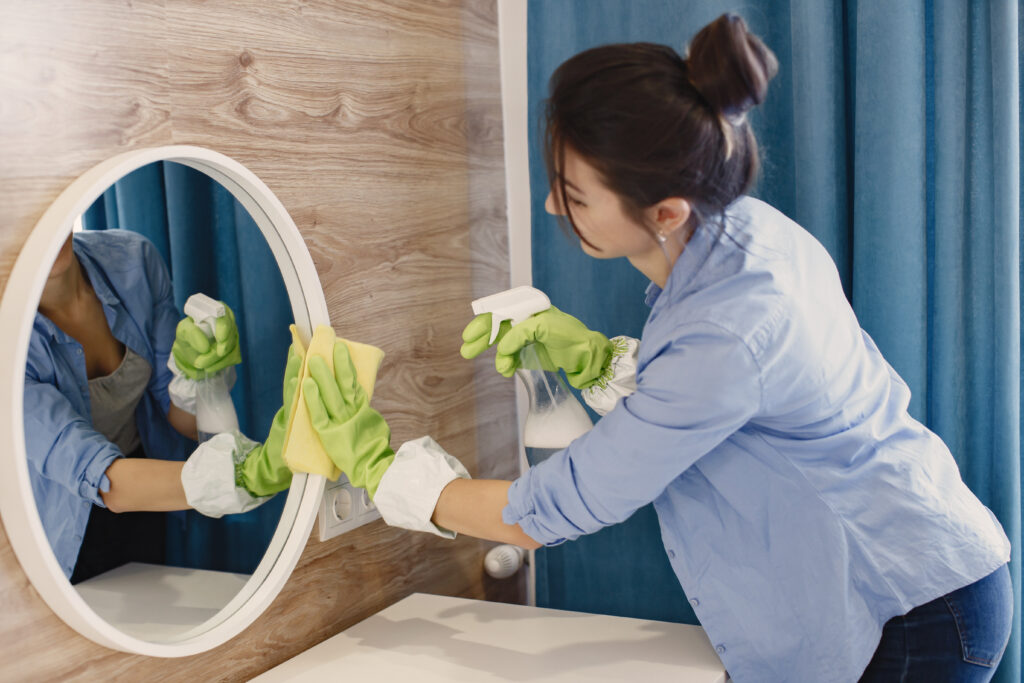
Bathrooms need more attention than any other room in your home. Surfaces like the toilet, tub, and sink need product contact time to disinfect properly. Starting here gives your cleaning products time to do their job while you work through the rest of the space.
The moment you walk in, spray the toilet, tub, and sink. Don’t wipe yet. Let the product sit while you work on everything above it. This dwell time is what actually breaks down bacteria and soap scum — wiping too soon cuts that process short.
Once your surfaces are sprayed, work top to bottom:
- Light fixtures and exhaust vent
- Mirror and medicine cabinet
- Counter and sink
- Toilet — outside first, then seat, then bowl
- Floor last
The most common mistake in bathrooms is grabbing a dry cloth before the spray has had time to work. A few extra minutes of dwell time makes a real difference in how clean the surfaces actually get.
We always spray the toilet and tub the moment we walk into a bathroom. By the time we’ve finished the mirror and counter, the product has done half the work for us.
Step 2 — Dust and Tidy Every Room Top to Bottom
Once the bathrooms are done, move through every other room before you touch a vacuum. Dusting always comes before floor cleaning. Any debris you knock loose will land on the floor — and that’s fine, because the floor comes next.
Start at ceiling level and work your way down:
- Ceiling fans and light fixtures
- Tops of cabinets, shelves, and tall furniture
- Window sills and blinds
- Furniture surfaces and décor
- Baseboards last
As you dust, tidy as you go. Clutter on surfaces slows down every step that follows. Clear items off counters and tables before you wipe them down.
Use a microfiber cloth, not a feather duster. A feather duster moves dust around. A microfiber cloth traps it. That difference matters when you’re trying to actually remove debris rather than just relocate it.
Vacuum always comes after dusting — never before. If you vacuum first, you’ll pull out the vacuum a second time after dust settles on the floor. Do it once, do it in the right order.
Baseboards are the most skipped surface in DIY cleaning. They’re also the first thing a professional notices when checking their own work. Don’t skip them. Our professional cleaning services cover baseboards on every job.
Step 3 — Vacuum and Mop All Floors Next
Once the dust has settled — literally — it’s time to take care of the floors. Every room gets vacuumed before anything gets mopped. Mopping over dry debris doesn’t clean it. It just pushes it around and leaves a muddy residue behind.
Follow this sequence on every floor:
- Vacuum all rooms — carpet and hard floors alike
- Pay attention to edges along baseboards and under furniture
- Mop hard floors last, after vacuuming is fully done
When you mop, start at the far corner of the room and work backward toward the door. This keeps you from stepping on the floor you just cleaned. It sounds simple, but almost nobody does it — and walking over a wet floor undoes the whole step.
Different floor types need different products. Hardwood, tile, and vinyl each respond differently to cleaners and moisture levels. Using the wrong product on the wrong floor can dull the finish or leave streaks over time. Check your floor manufacturer’s care guidelines if you’re unsure.
Between professional visits, light surface maintenance — dry mopping and quick vacuums — keeps floors in good shape longer. Deep cleaning is a different job and needs to happen on a regular schedule.
The backward-mopping rule sounds obvious. Almost nobody follows it. Start at the far corner, every time.
Step 4 — Clean the Kitchen Last (Here’s Why)
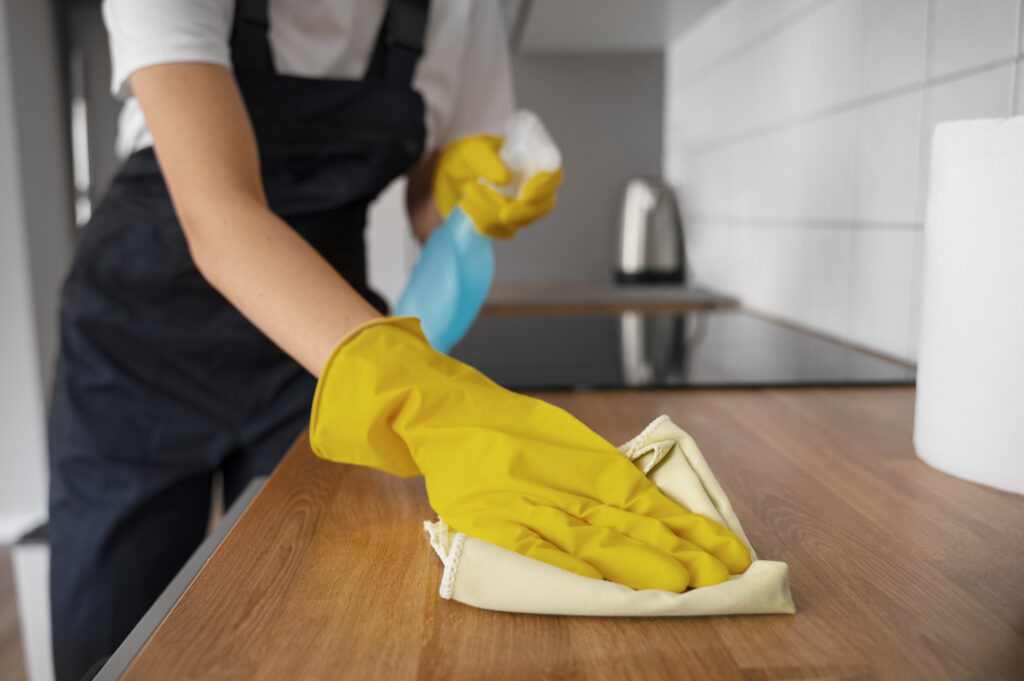
The kitchen is the greasiest room in your home. Cleaning it first means grease and food particles can travel on your hands, cloths, and tools into rooms you’ve already cleaned. Saving it for last keeps everything else protected.
Work through the kitchen in this order:
- Appliance exteriors — fridge, dishwasher, oven front
- Countertops and backsplash
- Sink
- Stovetop
- Floor last
Apply your degreaser early and let it sit before you wipe. The same dwell time logic from the bathrooms applies here. Grease needs time to break down — wiping immediately just smears it around.
The most missed spots in any kitchen:
- Under the toaster and small appliances
- Top of the refrigerator
- Inside the microwave
- Cabinet fronts near the stove
We check the top of the fridge on every job. It’s the single most skipped surface in residential kitchens — and it builds up fast.
If this list feels long, that’s because it is. Bathrooms, dusting, floors, kitchen — done correctly, this is a real system. Professional cleaners train specifically to move through all of it efficiently, every single time. If you’d rather hand it off, A&H Natural Cleaning is here!